The Coming Harvest
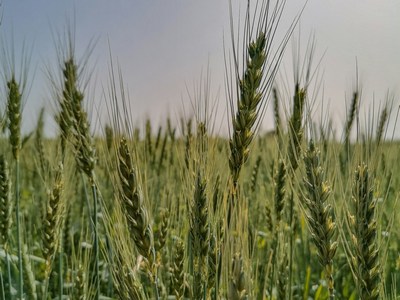
For those who know me best, they will readily affirm that autumn/fall is my favorite time of the year. I love to see the changing of the leaves and to feel the cooler temperatures. While those things are nice to enjoy, there is something else that happens during that time of year that makes that season even more important. That is the time when farmers are able to harvest their crops for that year. Enormous amounts of vegetation are gathered so that people around the world can continue to enjoy different types of food. Each year the process repeats itself, and people are blessed.
It should not surprise us that Jesus would use such an event to teach a very important lesson. In what we now call Matthew chapter thirteen, there is a record of a parable that was taught years ago. Jesus became known for utilizing parables to reveal His message. On this occasion, it is written, “Another parable put he forth unto them, saying, The kingdom of heaven is likened unto a man which sowed good seed in his field: But while men slept, his enemy came and sowed tares among the wheat, and went his way. But when the blade was sprung up, and brought forth fruit, then appeared the tares also. So the servants of the householder came and said unto him, Sir, didst not thou sow good seed in thy field? From whence then hath it tares? He said unto them, An enemy hath done this. The servants said unto him, Wilt thou then that we go and gather them up? But he said, Nay; lest while ye gather up the tares, ye root also the wheat with them. Let them grow together until harvest: and in the time of harvest I will say to the reapers, Gather ye together first the tares, and bind them in bundles to burn them: but gather the wheat into my barn” (Matt. 13:24-30).
For some, the message of the parable is easy to deduce. For others, there might be a bit of difficulty. It would seem that the early disciples of Jesus struggled with the meaning. For it is recorded, “Then Jesus sent the multitude away, and went into the house: and his disciples came unto him, saying, Declare unto us the parable of the tares of the field” (Matt. 13:36). Jesus did not rebuke the men, but instead He gave them a divine interpretation. “He answered and said unto them, He that soweth the good seed is the Son of man; The field is the world; the good seed are the children of the kingdom; but the tares are the children of the wicked one; The enemy that sowed them is the devil; the harvest is the end of the world; and the reapers are the angels” (Matt. 13:37-39). Every aspect of the parable had an explanation. To this day, Christians are still being produced out of the world because of the work of Jesus and His disciples. Sadly, though, the devil is still doing his part to produce sinners. Peter wrote, “Be sober, be vigilant; because your adversary the devil, as a roaring lion, walketh about, seeking whom he may devour: Whom resist stedfast in the faith, knowing that the same afflictions are accomplished in your brethren that are in the world” (1 Pet. 5:8-9).
Then there is the point of the harvest. At the end of time, angels/messengers of God are going to be used to bring in the Lord’s harvest. At the same time, something must be done with the “tares” that are there as well. Jesus continued, “As therefore the tares are gathered and burned in the fire; so shall it be in the end of this world. The Son of man shall send forth his angels, and they shall gather out of his kingdom all things that offend, and them which do iniquity; And shall cast them into a furnace of fire: there shall be wailing and gnashing of teeth. Then shall the righteous shine forth as the sun in the kingdom of their Father. Who hath ears to hear, let him hear” (Matt. 13:40-43). Obviously, the Judgment was being described. It seems pretty straight forward. The saved will go to Heaven, and the lost will be condemned to Hell. Even though the “tares” grew alongside the “wheat,” that did not change the fact that they were lost. Which of the two are we? Are we spiritually healthy “wheat,” that will get to enjoy being with the Father, or are we simply “tares” that will one day be culled? Let us make sure that we are prepared for the coming harvest. There are no indicators of when it will be, so we must be ready every day.

About The Author
